You’ve put your commercial floor project in Perth out to tender, and all potential flooring contractors’ proposals are now on your desk. You’ve already checked their basic licensing, insurance and regulatory compliance. Beyond the brochures and work quotes, is there anything else a business property manager like yourself should consider before deciding who to hire?
Here are a few tips to help you discern which flooring contractor in Perth is the most trustworthy and best suited to your requirements.
The role of a commercial floor contractor
A truly professional flooring contractor isn’t just an installer of floors. They should know how to work with corporate clients and business owners. They should have the understanding and experience to help you manage a floor installation or renovation alongside your daily business logistics.
During their initial walkthrough of your site, pay close attention to how each candidate contractor assesses your situation.
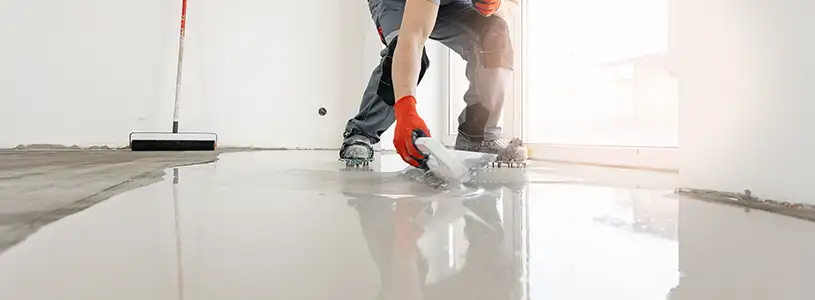
Without much prompting, a good flooring contractor should discuss these variables with you:
New Build, Repair or Replacement
Are you building on a new site or is this a renovation? If it’s a new site, what substrate preparation is needed for stability? If it’s an existing property with old floors, can any existing slab be salvaged through subfloor preparation, grinding, and levelling? Does your site require structural repair or just simple fixes?
The Most Efficient Floor Choice
Which flooring system (e.g., plain polished concrete, rapid-cure epoxies, thin-set terrazzo) and materials suit your site and operational needs? What’s the best choice that also suits your budget and timetable?

Operational Integration
What adjustments are needed in the contractor’s flooring work, your staff activities and your business operating hours? When and where can the ingress and egress of flooring materials and equipment occur?
Can the floor work be done during your business hours, or should it be done during off-hours instead? Should the flooring work be scheduled on a modular basis? Should we tackle one area before moving on to the next, allowing enough time to relocate operations, employees, tenants and inventory?
True Return-to-Service Windows
How long will the chosen flooring materials take to cure properly? When can we allow pedestrian foot traffic? What about heavier mechanical loads (e.g., forklifts, parked cars)?
Transparent Costing
What are the real costs when factoring in out-of-hours labour, specialised containment setups, and rapid-set chemical technologies?
The vetting: 4 questions every manager must ask
On your part, you also need to ask a candidate flooring contractor these questions.
Question 1: “Can you walk me through your precise phasing and zoning plan for our specific floor layout?”
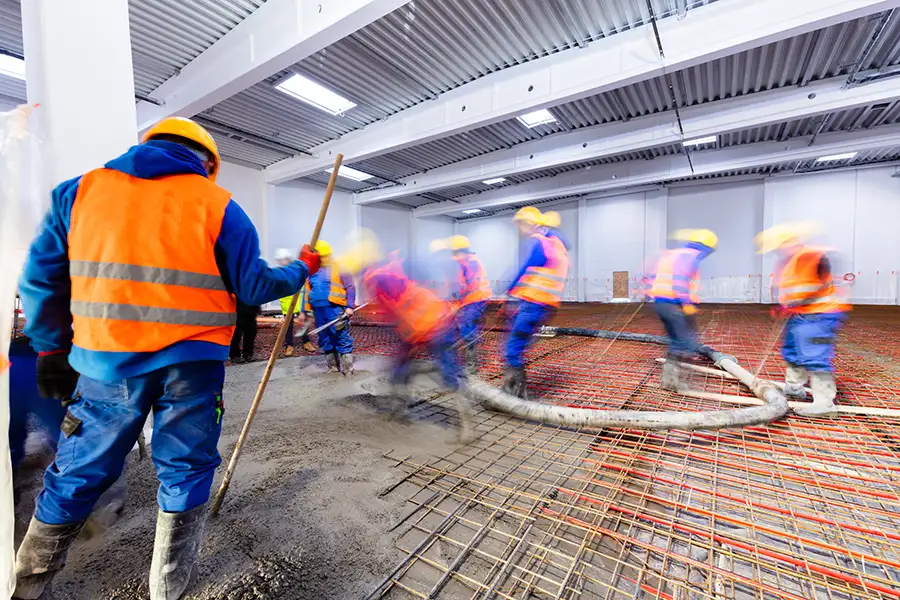
What to look for: A seasoned commercial specialist won’t tell you, “Don’t worry, mate, we’ll figure out the details when the work starts.” After they’ve assessed your site, they should present a concrete strategy for segmenting and optimising your floor space (e.g., breaking a massive warehouse down into matrix grids; dividing high-traffic retail corridors into linear halves) that won’t completely disrupt operations.
Look for alignment between their recommended traffic-shifting schedule and the actual curing time of the flooring finish they are installing. For instance, if they propose coating a main entrance zone at 2:00 AM and opening it to hundreds of staff arriving at 8:00 AM, the rapid-cure product (e.g., a rapid-curing polyaspartic coating) should be specified to achieve the required return-to-service window under the expected site conditions.
Question 2: “What specific equipment and containment methods will you use to guarantee dust and odour control?”
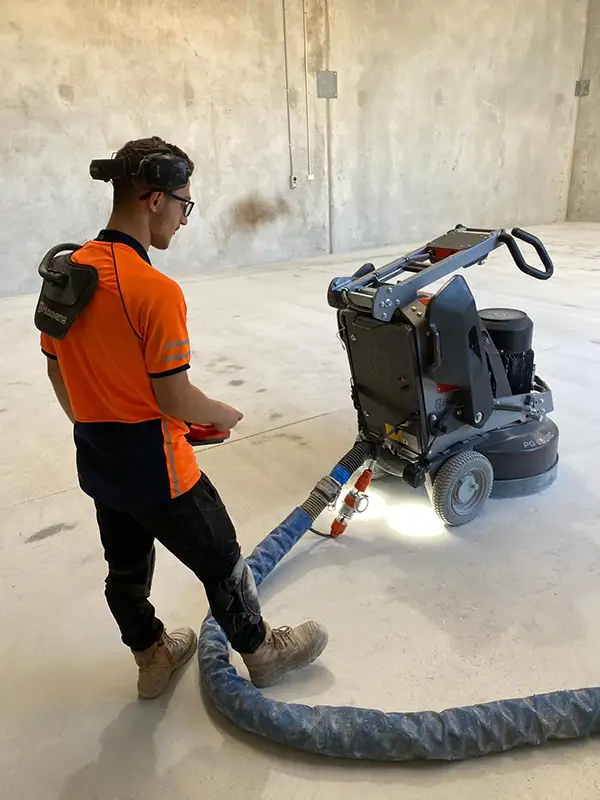
What to look for: Floor preparation is inherently messy. If a contractor claims standard commercial vacuums are enough to handle the dust from diamond grinding concrete or terrazzo, walk away.
For concrete and terrazzo, look for a team that connects their grinders directly to industrial-grade dust extractors.
And to provide additional protection for adjacent operational zones, they should specify measures such as:
- temporary floor-to-ceiling plastic hoarding
- heavy-duty sticky mats at zone transitions (to stop tracking)
- HEPA-filtered air scrubbers to maintain negative air pressure zones.
When it comes to chemical overlays or epoxies, ask about their VOC (Volatile Organic Compound) profiles. They should use low-VOC or high-solids systems appropriate to the project.
Make them specify where the air will flow. They should implement an appropriate ventilation strategy (e.g., high-velocity exhaust fans) to direct air from the construction site out to the building’s exterior. They should not allow any fumes to recirculate through your building’s active HVAC system.
Question 3: “Can you provide two references for recent commercial projects you’ve completed, where the facility/business remained fully or partially operational during the installation?”
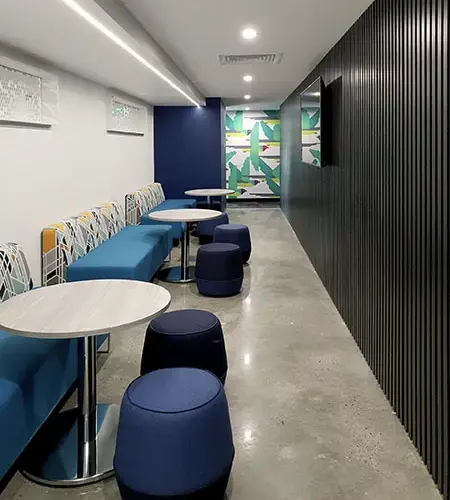
What to look for: Don’t just ask for photos that prove their past project’s final floor looked beautiful. Ask about their operational discipline:
- “Did your crew stay inside their cordoned-out active zones?”
- “Did dust leak into your client’s retail inventory/office desks/work areas? How did you address that?”
- “Did you consistently finish nightly floor work on time, allowing your client’s morning shift employees to resume without delay? Or were there days when your shifts went overtime? What caused it?”
Note: There’s a reason why developers and business owners look for flooring contractors who specialise in commercial properties. A residential contractor working on a commercial site for the first time may misjudge the speed required to let a client’s commercial morning shift operate as usual.
Question 4: “What is your backup plan if, for some reason, a specific section fails to cure within the scheduled overnight window?”
What to look for: Unexpected site issues happen, even in Perth’s generally dry climate. For instance, sudden temperature changes, elevated humidity, or excessive moisture within the concrete subflooring or top finish can delay the curing or return-to-service time of certain flooring systems.
Different flooring systems will react differently. For example:
- Epoxy coatings: highly sensitive to temperature, humidity, and concrete moisture.
- Polyurethane systems: also affected by environmental conditions.
- Polyaspartics: generally more tolerant of a wider range of installation temperatures.
- Polished concrete: doesn’t “cure” in the same way because there is no resin coating (unless a densifier or sealer is being applied).
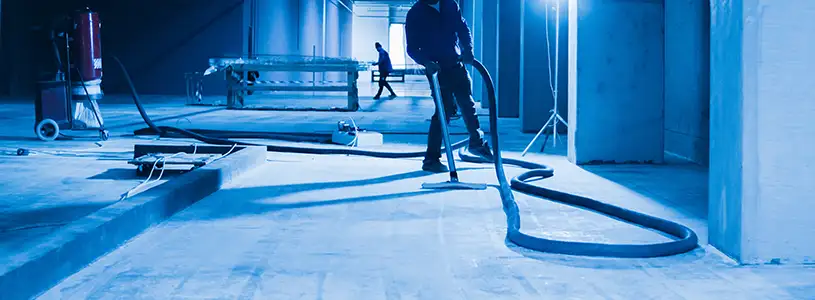
A seasoned commercial flooring contractor will present you with a contingency plan even before these issues pop up. A few examples:
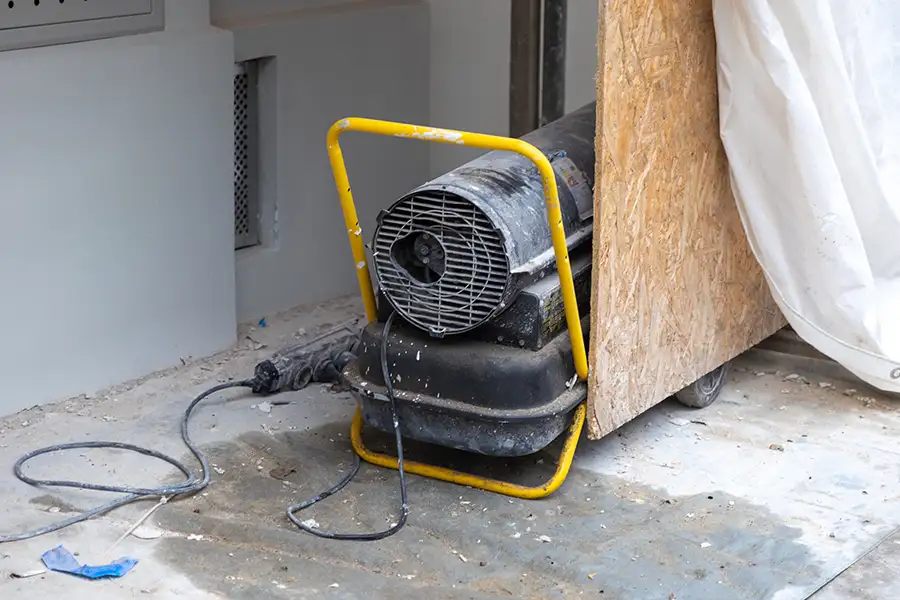
- controlling ambient temperatures with temporary industrial heating (e.g., industrial floor heaters)
- having commercial dehumidifiers on standby
- having alternative manufacturer-approved products available for changing site conditions
- implementing an agreed traffic-management, rerouting and safety plan if an area cannot be reopened on schedule
Red flag: beware the “empty site” mindset
The biggest warning sign is a flooring contractor who downplays your strict dust or odour containment requirements or subtly pushes back against working in tightly controlled, off-peak night or weekend phases.
These are operators accustomed to working on new, empty construction sites where they have total control over the building, zero tenants, and no foot traffic to protect. An inexperienced “empty site” mindset is not what a contractor should have when dealing with flooring installations for existing commercial properties. Hiring someone like that will only leave you vulnerable to operational chaos, missed installation deadlines, substandard floor quality, and even lost revenues due to unplanned area closures.
Looking for a trustworthy commercial floor contractor in Western Australia?
At Art of Concrete, we specialise in managing complex, high-end flooring installations for occupied commercial, industrial, and public facilities across Perth and the rest of WA.
As one of the most experienced polished concrete and epoxy flooring contractors in Perth, we prioritise low-VOC systems and modern dust-extraction equipment. Our skilled team possess the technical expertise to upgrade your surfaces and troubleshoot issues while minimising disruption to your operations.
Partner with us today. We’ll keep your property upgrades and your operations management up to your standards.
Searching for more information on subfloor preparation or other floor types? We have them here: