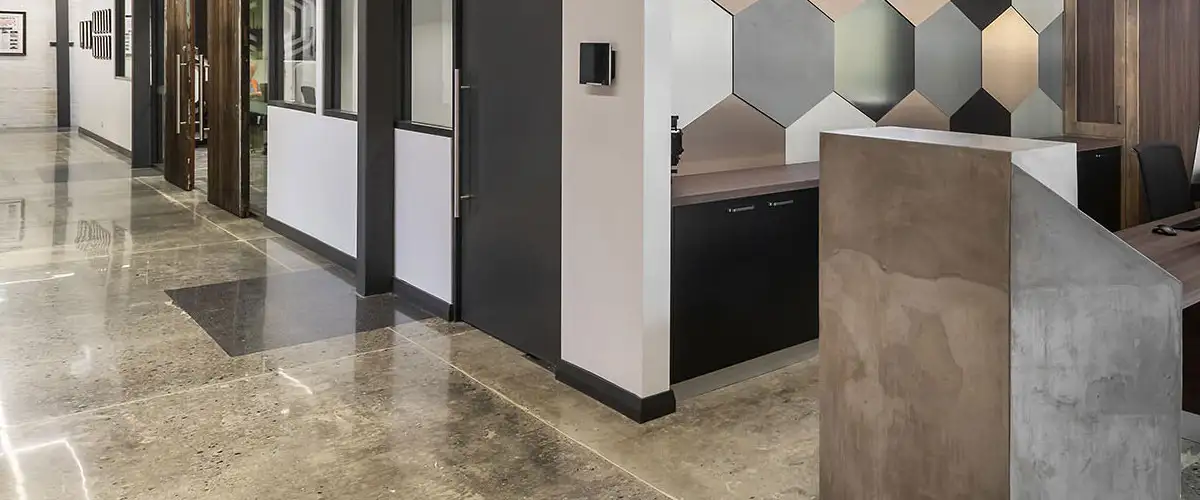
Are you trying to create environmentally sustainable housing or commercial spaces? Are you being told to use only sustainable concrete flooring because of budget constraints? Can concrete even truly be a sustainable building material?
Here are a few effective ways you can achieve the greener concrete floors you need for your projects.
What having ‘greener’ concrete floors means
‘Greener’ or sustainable concrete floors are those that help property developers, architects, interior designers or property managers achieve the following goals.
1. Cost efficiency (for construction & maintenance)
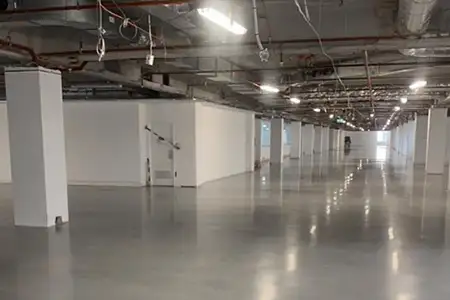
- Minimise transport and manufacturing inputs during construction
- Reduce the need for secondary floor finish materials
- Lower future renovation waste
- Reduce maintenance budget and long-term capital expenditure
- Fewer disruptions to customers or tenants
2. Lower carbon footprint and better indoor air quality
- Decrease dependency on adhesives and chemical bonding systems
- Reduced potential accumulation of synthetic fibres and VOC emissions
- Simplified cleaning regimes using neutral, low-chemical products
- Lower risk of trapping dust and allergens compared to soft floor coverings
- Lower energy costs / achieve energy efficiency in interior lighting and temperature regulation
- Clearer sustainability narratives for ESG reporting
How to ensure your concrete is ‘greener’
With those goals in mind, here are 3 general ways you can achieve “low-carbon concrete.”
1. Use a modified concrete ‘formula’
Concrete is made of stone, sand and cement. Naturally, its most significant environmental impacts will always come from cement production and material mining.
But you can still reduce its environmental impacts with these methods.
Utilise blended cement
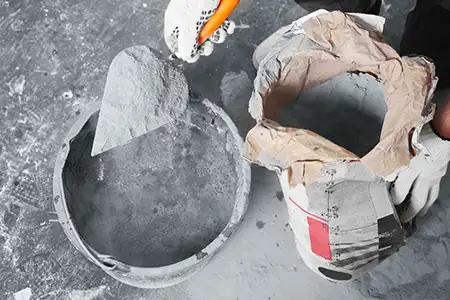
There are various “blended” formulas that combine Portland cement with cementitious materials or “extenders.” These tend to be manufacturing waste materials such as fly ash, silica fume, and furnace slag.
Some of these blended cements already carry as much as 85% refined extender material. By using these cement formulas, you significantly reduce your reliance on specific cement company productions that produce the most greenhouse gas emissions.
Add recycled aggregates
Modern concrete often uses stone and sand that have been mined or quarried from hills or mountains. The long-term environmental damage to these quarry sites is inevitable.
But you can replace some of the stone and sand in your concrete with recycled aggregates, such as:
- old crushed concrete from demolished properties
- slag aggregates and slag sand (from steelworks)
- old or recycled sand
- finely-ground old glass
Another idea is to customise a cement-polymer floor finish with small recycled aggregates. If you’re curious to know how this can be done, consult an expert floor contractor for details.
By doing this, you help reduce the demand for additional quarrying and decrease the amount of leftover construction material and waste going to landfills.
Important tips
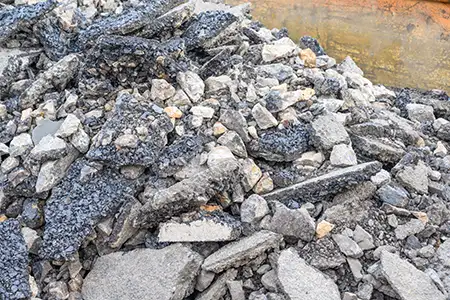
- For weight-bearing concrete floors, replacing 30% of your rough and fine aggregates with recycled material is an acceptable practice. However, always have your structural engineer verify if this is safe for your specific build or application.
- In general, replacing traditional aggregates with recycled material can significantly change the characteristics of your finished concrete. Thus, seek guidance from your project engineers before approving the use of any blended cement with recycled aggregates.
- When collecting recycled materials for aggregates, have them stored separately before using. This helps maintain the quality of the aggregates and improves safety for your entire project team.
2. Choose plain polished concrete finishes
To further reduce any negative impact on the environment, you can also opt for plain polished concrete finishes for your floors or walls, rather than those with decorative surface aggregates or mosaics.
Here’s why that helps.
You achieve a smaller long-term carbon footprint
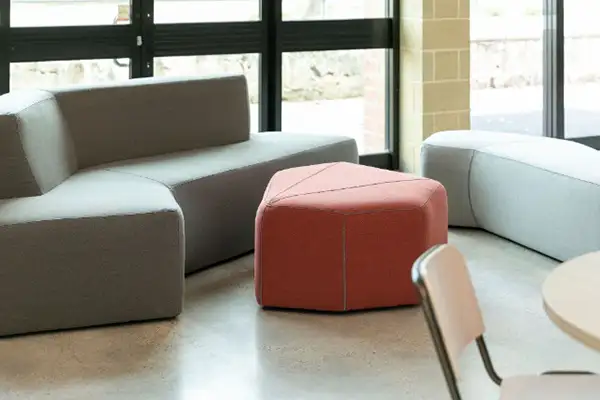
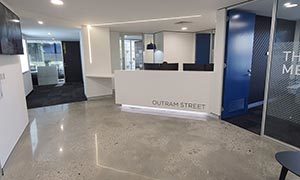
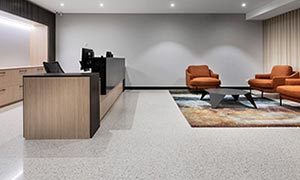
Plain polished concrete (without decorative surface aggregates or mosaics) is durable and can last for decades. It also has aesthetic versatility. It’s an appropriate floor finish for a wide range of exterior and interior designs.
This means that over the next decades, as you and your clients enjoy the use and modern look of eco-friendly concrete flooring, there’ll be lower material and labour costs for replacing, repairing, cleaning and maintaining it.
The less you spend on resources and labour, the smaller the total ‘carbon footprint’ of your property development will be throughout its life span.

You reduce microplastics and VOCs
Plain concrete floor slabs do not give off microplastics or volatile organic compounds (VOCs). That’s because they aren’t made of any synthetic fibres, heavy adhesives or petroleum-based materials. So when it comes to improving indoor air quality, polished concrete floors make a great alternative to carpets, vinyl or epoxy floors.
Important tips
However, the process of polishing a concrete floor introduces potential minimal sources for VOC emissions. Here’s how you can further ensure VOCs are kept to a minimum:

- Concrete dyes: Before polishing, a plain concrete floor can be dyed (rather than painted) to have a lasting colour that doesn’t chip or peel off. These dyes can sometimes contain trace amounts of VOCs. It’s not significant. But if you still want to avoid these, don’t colour your floors at all. Or have your floor contractor source reliable non-toxic dyes.
- Densifiers: During polishing, a chemical densifier is applied to help make the concrete surface harder. Make sure the densifiers used by your floor contractor are water-based and contain zero or near-zero VOCs.
- Sealers and stain guards: To help protect a polished concrete floor against liquid chemical spills, a “stain guard” or sealer is sometimes applied as a final step. Some sealers are solvent-based and emit a strong odour during application. To avoid this, you can ask your contractor to stick to water-based versions.
- Cleaning agents: Some cleaning formulas can have a tiny amount of organic compounds that react with the surface of a concrete floor that’s been dyed or covered with a stain guard layer. To avoid the release of VOCs from any reaction, consult your contractor and have them recommend the best non-reactive cleaning agents for your floors.
3. Integrate concrete floors with passive cooling/heating design
Concrete slabs have a high thermal storage capacity. They can help stabilise indoor room temperatures and reduce reliance on mechanical heating or cooling. This can lead to significant energy savings.
But concrete floors alone can’t do all that. They need to be part of a smart overall architectural design that incorporates passive cooling or heating.
To reduce energy use (and have people feel the difference), make sure your project fulfils the following architectural and interior design principles.
Proper location and orientation
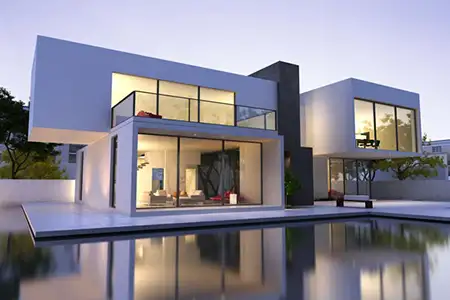
For a concrete floor to act as an effective thermal battery, the building’s windows and exposed concrete surfaces must be properly oriented (e.g., east vs. west; north vs. south) to manage solar gain.
In cooler climates or during winter, living areas and their concrete slabs should be positioned to receive direct sunlight (e.g., through east- and north-facing windows in the Southern Hemisphere). This allows the slab to absorb heat during the day and re-radiate it as the air cools at night.
Conversely, in warmer climates or periods, proper orientation (e.g., north, south, or west) helps prevent the sun’s rays from hitting the slab too long, keeping the floor cool and helping to pull heat away from the occupants.
Proper insulation and controlled ventilation
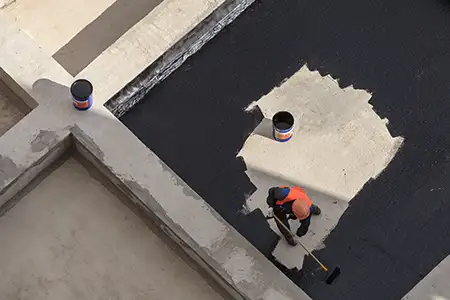
Concrete floors’ thermal mass is most effective when the building envelope is also well-insulated and “water-tight.”
Without proper under-slab and edge insulation, the heat stored in the concrete can escape into the ground, neutralising its energy-saving benefits. Furthermore, controlled ventilation is essential for “recharging” the thermal mass.
In summer, for example, cool night breezes can be directed over the exposed slab to strip away the heat it absorbed during the day, ensuring the floor is ready to absorb more heat the following morning.
Proper exposure

Perhaps the most critical factor is how the concrete slab is internally exposed. To take full advantage of its thermal mass, the concrete’s surface must be able to “exchange” heat with the rest of the room or interior space. Covering a concrete floor with materials like thick carpet, cork, or timber only creates an insulating layer that disconnects the slab from the indoor air.
By leaving a polished concrete finish exposed (instead of adding a covering), you ensure the slab can freely absorb and release thermal energy. This is key to maintaining a stable, comfortable indoor climate without constant mechanical intervention (e.g, air conditioning).
Ready to build a greener foundation for your next project?
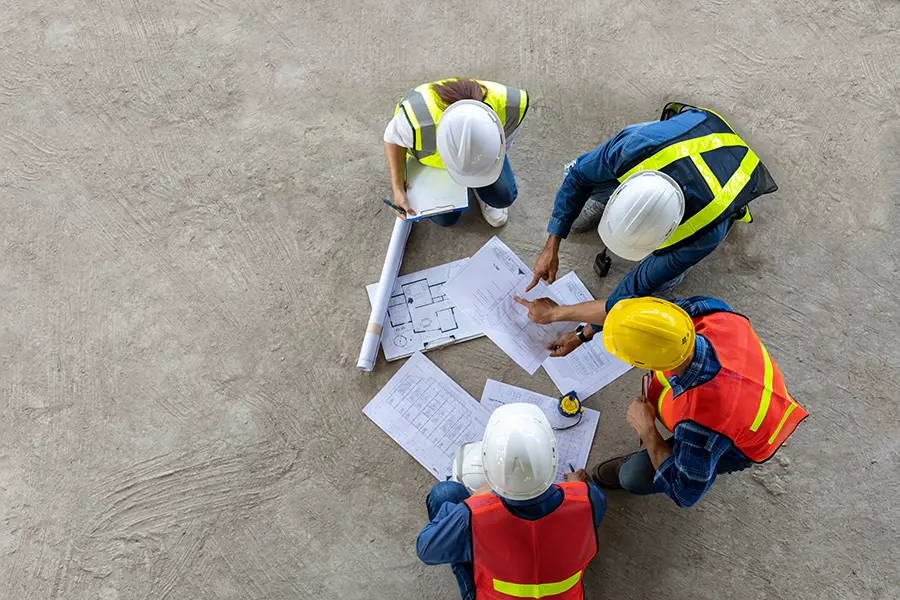
Choosing the right flooring is about more than just aesthetics; it is a foundational decision that impacts the energy efficiency, air quality, and long-term footprint of your property. Whether you are an architect designing a high-performance home or a developer looking to reduce life-cycle costs, polished concrete offers a proven path toward a more sustainable built environment.
At Art of Concrete, we specialise in helping professionals across Perth and Western Australia implement “greener” flooring strategies. From selecting low-VOC water-based densifiers to achieving the perfect finish for passive solar gain, our team brings the technical expertise needed to ensure your concrete floors perform as well as they look.
Contact us now. Let’s collaborate on your next sustainable build.
Do you have questions about subfloor preparations or want to explore other flooring options? Begin here: