Are you considering an epoxy floor coating for your latest development project in Perth?
Even though you will have expert professionals doing the work for you, there are a few specifics about epoxy floors that a project or building manager like yourself must be aware of before the installation begins.
The preparation stage
Epoxy flooring is essentially a layer of epoxy resin on top of a concrete substrate. But before that resin can be applied, the concrete below it must be properly prepared.
It’s the flooring contractor’s job to make sure that the concrete is ready. Nevertheless, as the project’s manager, you should be aware of the following:
1. The concrete should be repeatedly inspected.
Your flooring contractor should not only evaluate the concrete’s condition at the start of the project, but also keep a watchful eye on it, right up to the very moment they apply the epoxy compound.
Aside from identifying the kind of preparation required for the epoxy layer to adhere properly to the concrete, careful monitoring helps catch any new or previously unnoticed issues (e.g., hairline cracks, damp spots). If you don’t address these issues, they can cause long-term problems with the finished epoxy flooring.
2. The concrete floor should be solid, stripped clean, and levelled.
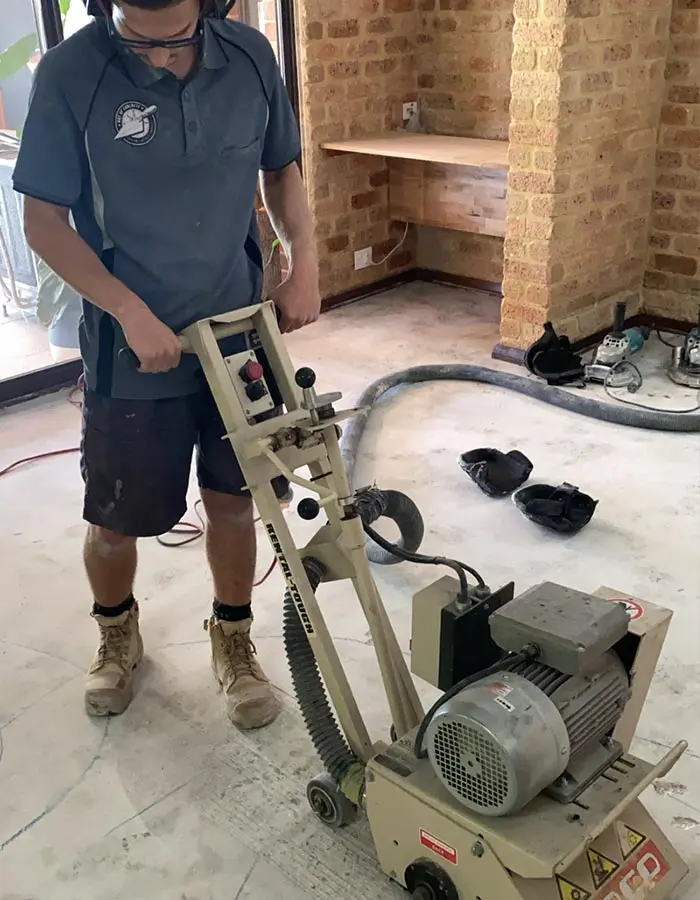
The concrete base should be completely dry, clean, and free from any leftover dirt, oils, grease, or other chemical traces that may react with the epoxy coating.
If it’s a newly-formed concrete floor, that concrete must “cure” for 30 to 60 days before the epoxy coating can be poured on it. You should give ample time for this in your project’s schedule.
If you’re dealing with an existing concrete floor, have it cleaned and stripped of any old sealing or coating. Depending on the case, the professionals you’ve hired may use acid cleaning solutions, mechanised abrasives, or even shot blasting to achieve that. They must make sure the concrete floor is level and even throughout.
Any cracks within the concrete should also be sealed up with special polymer-based fillers that are appropriate to both concrete and epoxy resin.
Application stage
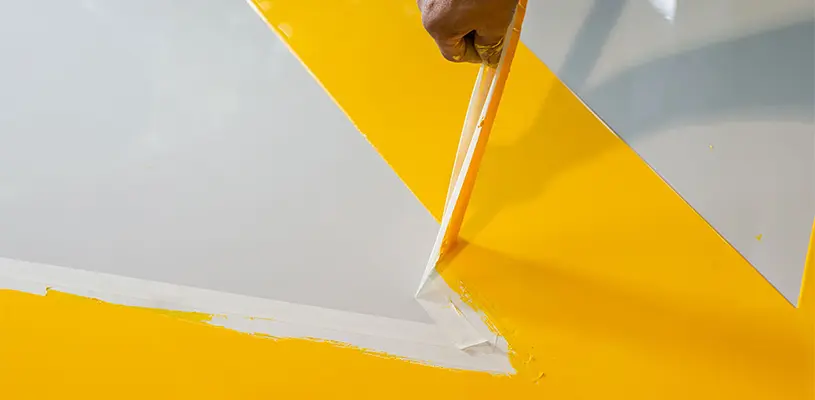
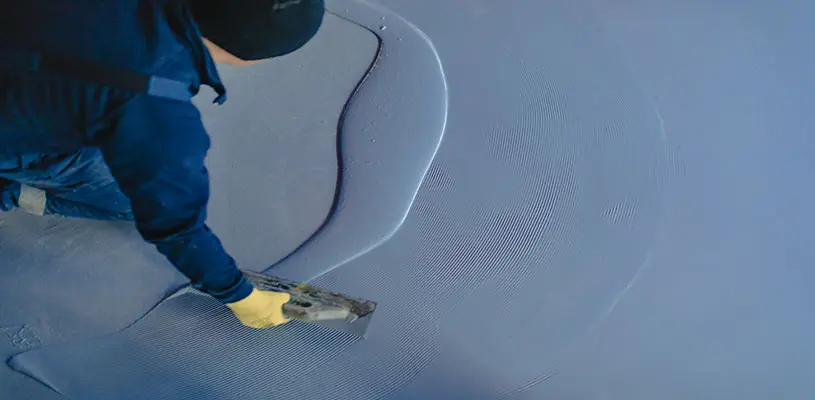
At this stage, the liquid compound of epoxy resin and hardening agent is prepared and poured over the concrete substrate. The epoxy can be applied in layers, with each layer given time to dry and set before the next one is poured. The topmost layer can also be a polyurethane topcoat.
Here are the most important things to know about that process:
1. Epoxy flooring should be installed in dry or low-humidity conditions.
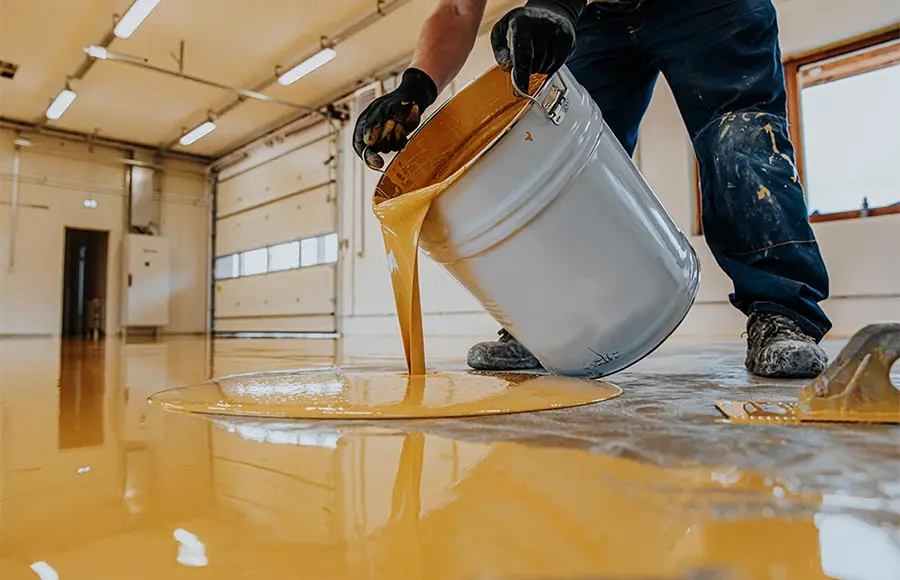
Uncoated concrete substrates can absorb spilled liquids or moisture from the air. Ordinarily, this isn’t much of a problem, as these evaporate from the concrete over time.
An epoxy flooring effectively seals off concrete and makes it water- or moisture-proof. Any wetness or moisture still trapped within the concrete can never evaporate. The concrete can’t “breathe.”
And that becomes a problem. Trapped moisture prevents the epoxy layer from adhering properly to the concrete. Eventually, it will start bubbling, buckling, or flaking off (what contractors call “delamination”).
This is why the best time for you to schedule an epoxy flooring installation is during the less humid times of the year. You can avoid any moisture absorption by the bare concrete that way. Your contractor should carefully inspect the concrete substrate for any damp spots that need drying off before it is completely sealed off.
2. Adding texturing or a non-slip additive is useful.
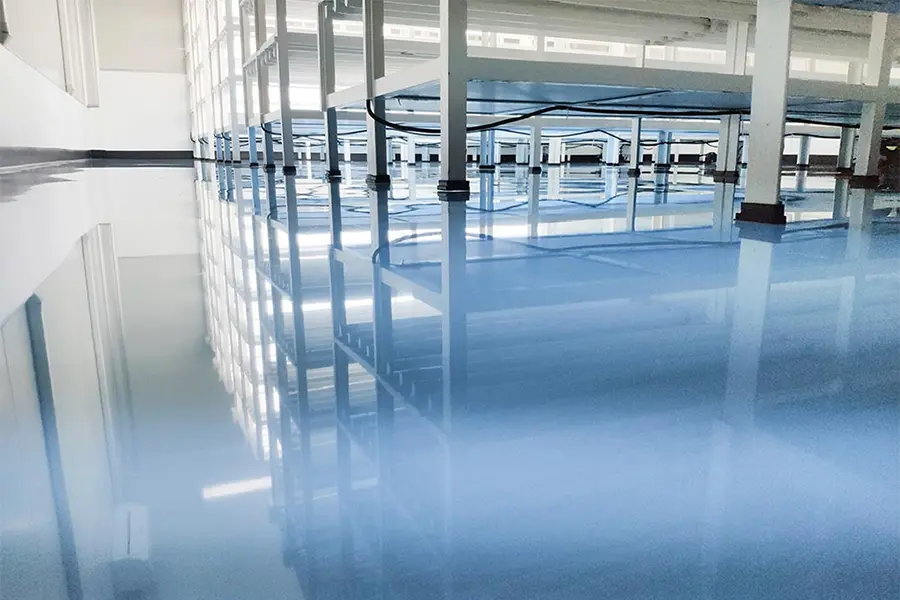
Smooth epoxy floors are popularly used for many commercial and industrial applications because they are less expensive and easier to clean than other types of floors. However, the floors’ smooth surface can become extremely slippery if wet or covered in oil.
If your epoxy flooring is installed in an area that can get exposed to bad weather and spilled liquids or oils (e.g., indoor parking lot, restaurant kitchen, factory, petrol station), a non-slip additive can be added to the epoxy compound to lessen the danger of slipping or skidding. Adding texture to the epoxy floor’s surface can also help. So be sure to discuss adding these options with your flooring contractor early on in the project.
3. The installation may require a few extra days to set and cure.
Depending on the type of epoxy compound used and how many layers of it are applied, installing an epoxy floor can take anywhere from 24 hours to 4 days. Each layer can take at least 24 hours to dry and set.
However, once all layers are set, your contractor might advise you to give it yet another 24 hours before you allow people to walk on it.
And if the epoxy flooring is in a high-traffic or heavy load area (e.g., parking lot), the epoxy compound your contractor recommended may need as many as 7 extra days to cure before cars or crowds can be allowed to pass through.
4. Ambient temperature can also affect epoxy flooring adhesion.
Epoxy flooring material is usually forgiving enough to allow installation work in temperatures anywhere between 10 and 30 degrees Celsius.
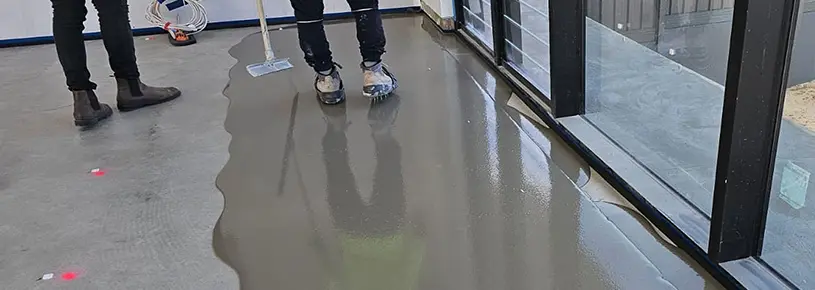
Anything below or above that temperature, however, may affect how well the coating pours onto the concrete surface. It can also slow or speed up the drying and curing, or even affect the finished product’s durability.
If the weather forecast for Perth during the scheduled installation warns of extreme heat or cold, be sure to discuss with your contractor how you can mitigate its effects with proper work scheduling.
5. The dust and fumes from construction may pose a health hazard.
Don’t forget: it’s epoxy. Depending on the ambient temperature and the quality of the coating compound prepared, the epoxy may still give off toxic fumes that can drift farther than the floor’s site.
Moreover, if your site requires pre-levelling of the concrete subfloor, that will mean diamond-grinding its surface. Most diamond grinder machines simultaneously vacuum the dust that is generated. However, the work isn’t 100% dust free.
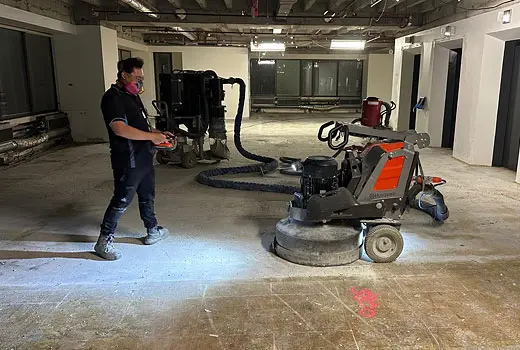
This is why your contractor’s employees will be wearing protective masks as they work on the installation of your epoxy floor.
But what about everyone else who might be in the vicinity? If your epoxy floor installation is located indoors and near other offices or residences, dust or fumes may likely reach beyond your site. Imagine the discomfort, dizziness, or nausea that other people could experience.
To avoid that scenario, be sure to discuss safety measures with your contractor. Talk about what you should do to isolate the installation area and minimise the escaping fumes and dust. If people working in adjacent places must temporarily transfer elsewhere for the duration of the project, plan for this well ahead of implementation.
Epoxy Floor Maintenance
How long does an epoxy floor last? Once installed and cured, epoxy flooring is durable enough to last several years, especially if you are vigilant.
The most important things to remember are:
1. Regular cleaning is a must.
Accumulated dirt or grit can scratch an epoxy floor. Each time someone or something moves across it, any microscopic debris will abrade its surface. To avoid that kind of trouble and help extend its life, here’s how to clean an epoxy floor.
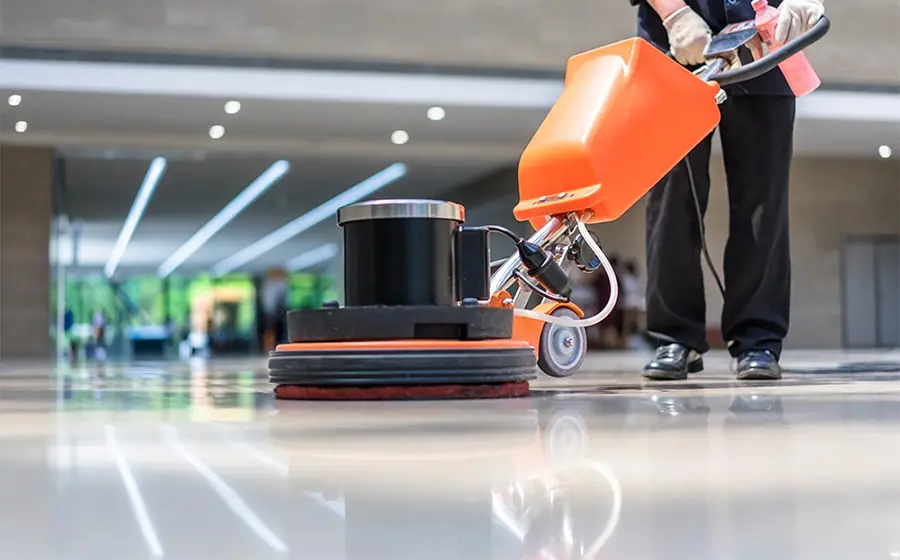
Be sure to do weekly or even daily cleanings, depending on how often the area needs it. (The best dry tool to use is a vacuum with a soft brush.) Note: Take extra care as well with moving any machinery across the floor; repeated movement of any heavy equipment on any remaining grit will create significant scratch marks.
Clean any spilled liquids, oils, or other chemicals immediately. If these linger on the epoxy floor for too long, the surface can turn slippery and greasy – becoming a potential safety hazard for anyone who has to walk across it.
2. Use the correct cleaning agents.
A wet mop, scrubbing brush, and lukewarm water are usually enough to get an epoxy floor clean. The floor cleans easily, and you rarely need detergents.
It’s best to avoid using soap-based cleansers, as these tend to leave a slippery buildup on the floor’s surface.
Never allow your maintenance people to use harsh abrasive cleaning tools or chemicals, as these can damage the surface of the epoxy floor.
Likewise, don’t allow the use of vinegar, citrus, or any acid-based cleansers.
If there are tough spills or smudges, use a specially formulated cleaner, or a neutral, non-alkaline, non-acidic floor cleaner recommended by your epoxy floor supplier.
3. Consult an expert epoxy floor professional for repairs.
Even when properly installed, the durability of epoxy floors has limits.
You may start seeing significant damage on your floors within 5 to 8 years from installation.
Minor damage may even appear within 2 or 3 years. This is especially true if your floors are exposed to significant foot traffic, heavy loads, extreme changes in ambient temperature and humidity, or harsh chemicals.
Typical signs of damage:
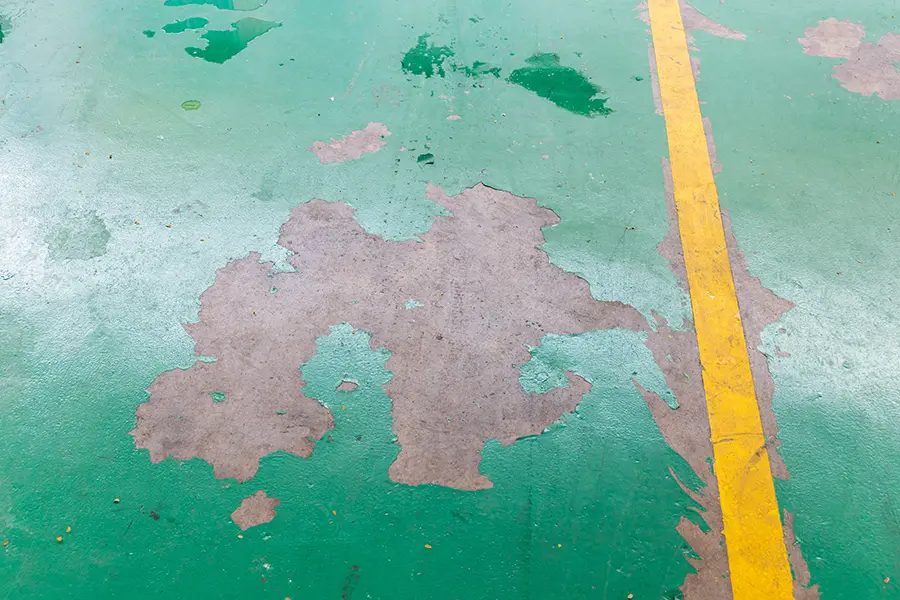
- Surface wear and abrasion – reduced slip resistance; thinning epoxy layer; visible light scratches and scuffs (especially in areas that endure the most movement).
- Discolouration and fading – loss of glossiness; yellowing or colour changes (particularly in areas often exposed to direct sunlight / UV rays).
- Cracking or chipping – minor chips at edges or corners; fine cracks in high-stress areas (where heavy loads impact or stress the epoxy coating)
- Increased clean-up efforts – floor generates dust or fine particulates more often, even after normal cleaning (due to gradual degradation of the top resin layer and entrapment of dust particles in the abraded surface).
- Bubbles, ripples, and uneven spots – frequent cycling between extremes of temperature and moisture can eventually seep into the substrate or ground, causing concrete slabs underneath to shift or release pockets of moisture or air; the top epoxy layer begins to delaminate
How to manage eventual wear and tear on epoxy floors:
- Conduct periodic and thorough inspections of all your epoxy floors. Note every sign of damage.
- Earmark a yearly budget for upkeep or future refurbishments, within a couple of years from installation.
- Rely on your trusted epoxy floor installation specialist to fix damages or reapply a new top coating every few years or so.
It’s time to call an epoxy flooring specialist in Perth
We specialise in both epoxy flooring and polished concrete. Our epoxy flooring system can endure the wear and tear of daily life, a chemical spill, and stress.
If you’re based in Perth, contact us. We know all about creating, restoring, and maintaining such floors. If you need help in choosing the type of epoxy flooring that best suits your project and maintenance budget, we’ll give you the crucial advice you need. We can also design and create a unique solution for you that’s both stylish and functional.
Do you have questions about epoxy sub-floor preparation or want to explore other flooring options? Begin here: